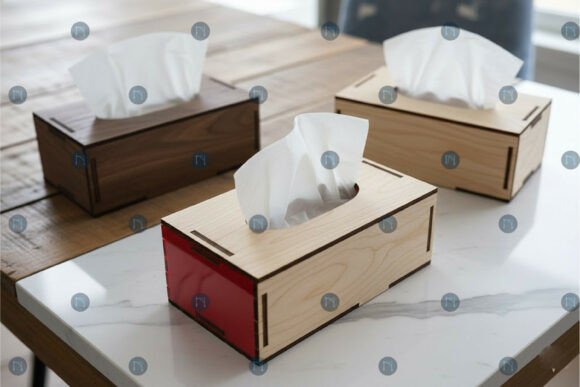
Laser Cut Tissue Box SVG Review
As a designer who spends half my day troubleshooting stitch errors and the other half worrying about client satisfaction, I approach every new digital asset with a healthy dose of skepticism. We have all been there: you download a file that looks stunning in the preview window, only to find it falls apart when your machine tries to execute it on actual fabric. Today, I am evaluating the Laser Cut Tissue Box SVG, a design intended for digital fabrication and craft projects. While its primary categorization often leans toward laser cutting, Cricut workflows, and Glowforge applications, I want to explore how this specific vector translates into the world of embroidery and textile design.
This review is not just about whether the lines are clean; it is about whether this design can hold up in a real-world commercial environment. Whether you are an Etsy seller looking for your next bestseller, a boutique owner curating home decor, or a hobbyist making personalized gifts, understanding the practical limitations and aesthetic potential of this file is crucial before you commit to production.
First Impressions and Visual Personality
The moment you load the Laser Cut Tissue Box SVG, the visual personality is immediately clear. It evokes a sense of whimsical utility. The shape is recognizable, playful, and inherently cozy. In the realm of Home Decor, items that blend function with charm tend to perform exceptionally well. This design captures that balance perfectly. It feels like something that belongs in a nursery, a rustic farmhouse kitchen, or a curated gift basket.
From a design perspective, the layout is open and inviting. The negative space within the tissue box motif allows for creative interpretation. If you are planning to use this as an applique design, the outer silhouette provides a strong anchor, while the inner details offer opportunities for texture. The mood is light, airy, and approachable. It does not scream for attention but rather invites the viewer to appreciate the detail. This subtlety is what makes it a versatile choice for various markets, from custom apparel to delicate baby embroidery.
Real-World Application: From Screen to Stitch
Let’s talk about how this design performs when moved from a digital mockup to a physical product. Imagine you are preparing a custom embroidered tote bag for a local artisan market. You choose a sturdy canvas tote and decide to place the Laser Cut Tissue Box SVG on the front pocket. Because the design relies heavily on clean lines and distinct shapes, it translates beautifully onto fabric. However, the execution depends entirely on your technique.
If you are treating this as a standard machine embroidery design, you need to consider how the different stitch types will interact. The outer border might benefit from a dense satin stitch to give it a polished, finished look that resists fraying. The interior details could be rendered using lighter fill stitch patterns or even running stitch if you want to maintain a hand-stitched aesthetic. This versatility allows you to adapt the design for different price points. A simple outline version works well for quick, affordable gifts, while a fully filled applique version commands a higher price point in your craft business.
I also see significant potential in holiday embroidery. During the winter season, this design could be adapted with festive colors—deep reds, forest greens, or metallic golds—to create a charming holiday-themed pillow cover or tea towel. The structure of the tissue box itself is neutral enough to be seasonalized without losing its core identity. For an Etsy seller, this flexibility means one digital purchase can yield multiple product listings throughout the year.
Where Caution Is Required
No design is perfect for every scenario, and being honest about the limitations is part of professional practice. There are several areas where the Laser Cut Tissue Box SVG requires careful handling.
- Hoop Size Constraints: If you attempt to embroider this on a very small item, such as a baby onesie chest area or a tiny patch, the fine details may become lost. Always confirm your hoop size relative to the design dimensions. If the design is too large for the available hoop, you risk distortion or inability to stabilize the fabric properly.
- Fabric Texture and Stability: This design assumes a relatively smooth surface. Working on highly textured fabrics, such as heavy bouclé or loose-weave linen, can obscure the intricate lines. Similarly, stretchy fabrics require a high-quality stabilizer to prevent puckering, which would ruin the crisp "laser cut" illusion you are trying to achieve.
- Dense Stitch Areas: If you fill the entire design with heavy stitches, the fabric may become stiff and uncomfortable, particularly if this is intended for custom apparel like sweatshirts or caps. Dense stitching can also cause needle breakage if the thread count is too high for your machine’s capabilities.
- Curved Surfaces: Attempting to apply this to a curved surface like a baseball cap can be challenging. The flat nature of the tissue box graphic may not follow the curve of the hat naturally, leading to visual distortion unless you use specialized 3D embroidery techniques.
Strategic Design Notes for Professionals
Before you add this to your library of design assets, here are some practical steps to ensure success.
- Test on Scrap Fabric: Never run a new design directly onto your final product. Use scrap fabric that matches the weight and type of your target material. This helps you gauge how the threads lay and whether the stabilizer is sufficient.
- Check Thread Color Contrast: The effectiveness of this design relies on visibility. Test it in black and white mockups first. Ensure that your chosen thread colors provide enough contrast against the fabric background. On dark fabrics, you may need to use a contrasting backing or light-colored threads to make the details pop.
- Inspect Small Details: Zoom in on the digital file. Are there any tiny corners or thin lines that might get lost in translation? If the design includes tiny lettering or decorative accents, verify that your machine can accurately reproduce them. If not, consider simplifying the design digitally before importing it.
- Review Licensing: As a commercial embroidery professional, you must respect intellectual property rights. Confirm whether the license allows for the sale of finished products made with this design. Some files are for personal use only, while others permit commercial sales. Clear licensing protects your small shop product business from legal issues.
- Create Printable Mockups: Before committing to production, create a printable mockup to show customers. This helps manage expectations and allows you to test marketing angles. Seeing the design placed on a real-life item, such as a tote bag design or a sweatshirt embroidery placement, gives you confidence in its appeal.
Final Verdict
The Laser Cut Tissue Box SVG is a charming, versatile addition to any designer’s toolkit. Its strength lies in its simplicity and emotional resonance. It fits seamlessly into the categories of personalized gift items, nursery decor, and kitchen towel designs. While it was originally conceived for digital fabrication, its clean geometry makes it an excellent candidate for embroidery when handled with technical care.
For the embroidery project enthusiast, this design offers a low-risk, high-reward opportunity. It is easy to digitize or interpret, forgiving of minor errors due to its bold shapes, and universally appealing. Just remember to prioritize stabilization, choose appropriate thread weights, and always test before you sell. When executed well, this design has the potential to become a staple in your finished product lineup, delighting customers with its blend of nostalgia and modern craft aesthetics.